The carbon cost of war: Greenhouse gas emissions from military activity
Governments across the world are rapidly increasing defence spending as armed conflicts intensify, geopolitical tensions mount, and the climate crisis deepens. In 2025, global military expenditure hit $2.887 trillion, a 2.9% increase from the previous year [1]. In the same period, European NATO members and Canada increased their defence expenditure by 20%, amounting to $90 billion [2]. Overall, NATO Allies have committed to spending 5% of annual GDP on defence by 2035 [3]. This will inevitably trigger increases in military spending elsewhere in the world [4]. In line with this, calls are growing for the UK to spend more on defence; in June 2026, Defence Secretary John Healey resigned from government, swiftly followed by Armed Forces Minister Al Carns, in protest of what they argued was inadequate investment in the UK’s defence capabilities [5].
With cascading climate impacts, tipping points, and nature loss posing significant national security threats [6], increasing defence spending might seem appropriate. These increases, however, come at the expense of funding climate action abroad [7], while the carbon cost of escalating militarisation (including open conflict, military spending, shifting military alliances, etc.) is significant [8]. The extent of military greenhouse gas (GHG) emissions and their impacts on the planet must not, therefore, be understated. Moreover, the problem threatens a vicious, self-reinforcing cycle: as climate-induced conflicts worsen, military activity is likely to increase, further entrenching the climate emergency [9]. This short article will draw attention to the problem of military activities and their GHG emissions while pointing to critical areas of research to support the case for demilitarisation on environmental grounds.
Military Spending, Climate Financing, and Carbon Emissions
The campaign by Code Pink, ‘War is Not Green’, is bringing to light the role of militarism in climate collapse [10]. Above all, it’s the US military leading the destruction – as the world’s most-polluting institution, it acts as the ‘enforcement mechanism for the fossil fuel industry’, with over 800 military bases around the world and a proposed $1.5 trillion budget for 2027, or nearly 52% of the entire planet’s military expenditure for 2025 [11]. The EU is a distant second, with its share of global military spending reaching 15.2% in 2024, followed by China with 12% [12]. The UK currently contributes about 3.1% [13]. With these spending figures now growing rapidly, countries’ capacities to adequately finance climate action and meet legally-binding climate targets are increasingly threatened.
For 2021-25, the planned UK core military budget was approximately £190.5 billion, compared to just £25.6 billion for reducing UK GHG emissions. With military spending now planned to quickly rise to £80 billion a year by 2029, this discrepancy is bound to worsen [14]. In general, rich countries spend about 30x more on militaries than on climate finance, with the US having the greatest climate finance shortfall of them all; in 2022, it increased climate finance by only $1 billion while increasing the military budget by $76 billion [15]. Between 2021-25, the UK spent over 7x more on the military than on Net Zero targets; £7.30 in military spending for every £1 of reducing UK GHG emissions [16].
The military sector is heavily reliant on fossil fuels, is more carbon-intensive than civilian sectors, and has large, complex supply chains [17]. Nations with the highest military expenditure are also among the very highest GHG-emitting nations [18]. Thus, compounding the problem of climate finance shortfalls are the emissions from military activity itself [19]. To date, the United Nations Framework Convention on Climate Change (UNFCCC) does not require countries to report or set targets for GHG emissions resulting from their militaries’ activities, and UNFCCC outcome documents largely fail to even acknowledge such emissions [20]. Due to US pressure, military emissions reporting was excluded from the 1997 Kyoto Protocol [21]. Further, the 2015 Paris Agreement did not make military emissions reporting mandatory – rather, such duties remained voluntary. This forces researchers to rely on poor-quality datasets and estimations from some countries which lack scope and specified targets, and allows governments to avoid responsibility [22].
While the data gaps and lack of reporting make it difficult to determine the GHG emissions of militaries, their contributions are estimated to be enormous. According to the best available data, Parkinson and Cottrell have conservatively estimated that around 5.5% of global GHG emissions stem from the military sector – this is an astounding carbon footprint of 2,750 MtCO2e, or 85% of the total emissions from all the world’s passenger cars in 2019 [23]. If the military sector were a country, it would have the fourth largest carbon footprint in the world behind only the USA, China, and India [24]. What’s more, since this data was collated before 2020, military developments in Ukraine and West Asia since the COVID-19 pandemic, along with many countries’ ensuing drive to militarise, have likely caused such figures to inflate further. In 2025, Parkinson estimated that a standardised military spending rise of $100 billion will increase the military carbon footprint by 32 to 59 MtCO2e [25]. NATO’s planned expansion of military spending may cause its carbon footprint to increase by an astonishing 132 MtCO2e [26]. Cumulatively, the climate consequences of maintaining spending at these levels will be devastating.
In the UK, the data is similarly hard to come by. According to the UK’s own GHG emissions reporting, its military fuel use amounts to 1.474 MtCO2e [27]. This, however, represents a ‘very significant gap’ in emissions reporting [28]. The UK’s Ministry of Defence (MoD) does not publish data on its total direct GHG emissions in its annual reports [29]. Figures published by the MoD are highly selective and fail to cover the full range of its emissions – Parkinson found that their figures amount to less than one-third of the MoD’s total direct GHG emissions [30]. Parkinson estimated that the overall carbon footprint from UK military spending was around 11 MtCO2e in 2018 – equivalent to the annual average mileage of over six million UK cars [31]. With military spending now considerably higher than in 2018 (2.35% of GDP in 2025 compared to 1.93% in 2018), alongside plans for it to increase substantially in the coming years, this figure is likely to be (and become) far greater [32].
Military Emissions: Origins and Consequences
As suggested by Neimark et al., direct military GHG emissions – which arise from sources that are owned or controlled by militaries, including military facilities, equipment, and munitions – are not the greatest source of emissions that arise from military activity [33]. There are also indirect GHG emissions, including from ‘purchased or acquired energy not owned or controlled’ by the militaries in question [34]. In their study of the Israel-Gaza conflict, Neimark et al. estimated that direct and indirect GHG emissions from the conflict exceeded 1.3 MtCO2e between October 2023 and January 2025 [35]. But this is not the end of the story. When accounting for emissions resulting from pre- and post-conflict activities like installing defensive fences, reconstruction, aid delivery, the displacement of people, and others, the actual emissions figure from the conflict reaches 33.2 MtCO2e [36]. The full picture, therefore, far overshadows direct GHG emissions only, and would likely dwarf the limited scope of the figures published by states, militaries, or defence departments.
Using the scope categorisations of Neimark et al., the full emissions picture would cover the following [37]:
Scope 1: Direct GHG emissions.
→ From sources that are owned or controlled by the organisation.
→ Including military facilities, equipment use, and use and disposal of munitions.
Scope 2: Indirect GHG emissions.
→ From purchased or acquired energy not owned or controlled by the organisation.
Scope 3: Other indirect GHG emissions.
→ Resulting from the activities of an organisation, but occurring from sources not owned or controlled by that organisation.
→ Including capital goods, purchased goods and services, building and construction, transport and distribution, and fuel- and energy-related activities.
Scope 3+: Other indirect GHG emissions linked to the military.
→ From other sources resulting from military activity and war fighting not covered above. → Including bunker fuels, building and construction (in theatre), aid delivery, infrastructure damage, debris, reconstruction, land use changes, medical care, displacement of people, and humanitarian support.
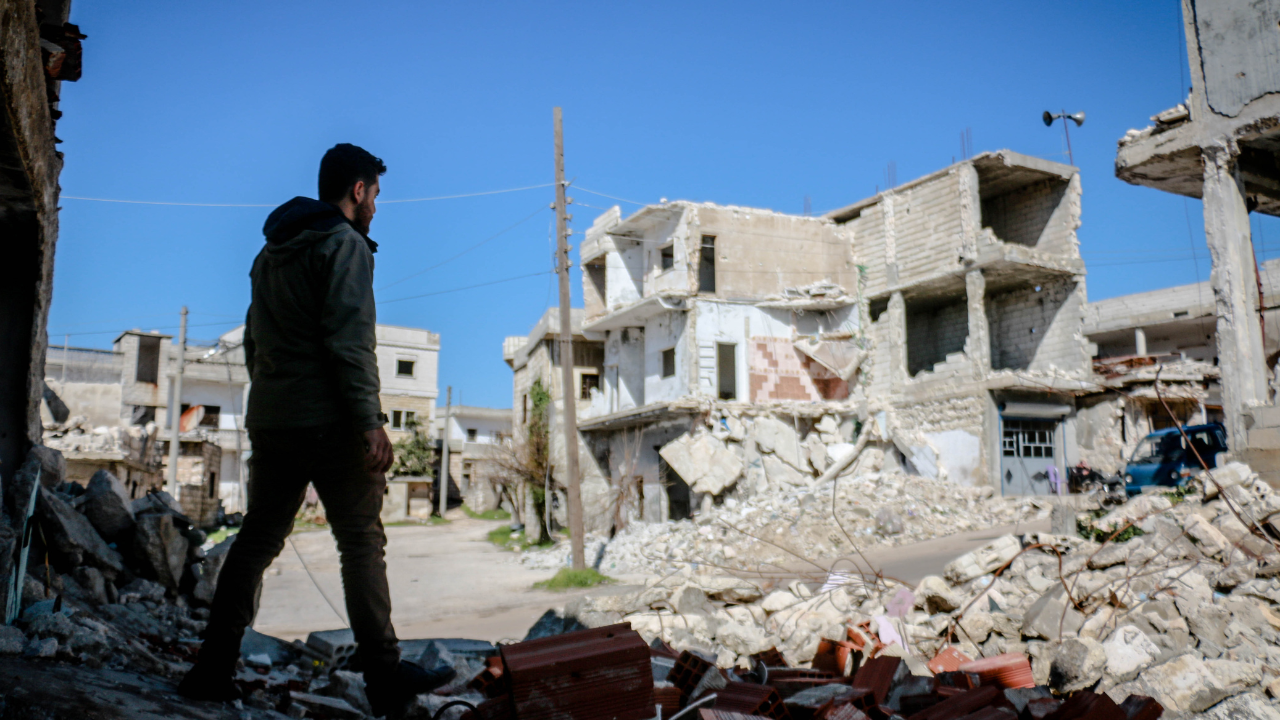
In their study of war-related emissions during the first 18 months of the war in Ukraine (February 2022 to August 2023), Bun et al. estimated that 77 MtCO2e were released – greater than the annual total GHG emissions of Austria, Portugal, or Hungary [38]. These emissions arose from the use of bombs, missiles, barrel artillery, and mines; the consumption of oil products for military operations; fires at petroleum storage depots and refineries; fires in buildings and infrastructure facilities; fires on forest and agricultural lands; and the decomposition of war-related waste [39]. The emissions consequences from conflicts extend far beyond front lines, and often beyond the borders of nations at war themselves, when factors like the carbon footprint of refugees or the transportation of ammunition from other countries are considered [40].
A further issue is that military conflicts have a ‘destructive impact on monitoring, reporting and verification of GHG emissions’ for nations at war [41]. In the case of Ukraine, the war has affected GHG national inventory reporting to the UNFCCC due to the failure to account for many of the emissions sources mentioned above. When the systems for data collection and analysis are damaged this way, military conflicts can significantly impact monitoring and reporting of GHG emissions internationally. The consequences of military conflicts for emissions reporting are, therefore, far-reaching. The problem is further intensified when more recent developments in warfare are also considered, most notably the Israeli-American war with Iran.
Conclusions
Without clear, mandatory reporting on military emissions (e.g. under the UNFCCC framework), alongside strong demilitarisation drives, military activity will further impact climate change mitigation efforts and ‘critically jeopardise’ our ability to prevent dangerous GHG concentration levels in the climate system [42]. Further, studies by Dong et al. and Block et al. suggest that the Shared Socioeconomic Pathways for climate mitigation devised by the Intergovernmental Panel on Climate Change are unrealistic given the lack of attention to the impacts of escalating military spending and conflicts on temperature projections [43].
Block et al. propose a nexus that elucidates the consequences of military conflict on climate change and climate mitigation efforts [44]. They argue that disruptions to global cooperation are inevitable, increasing the likelihood of geopolitical fragmentation and conflict that would obstruct climate mitigation efforts in the future, on top of significant additional GHG emissions [45]. Shifts in international alliances due to conflict can also have adverse effects on climate change mitigation [46]. Such delays in the transition to Net Zero require quickening the pace of climate change mitigation. This must involve demilitarisation and peace-building for climate stability, incorporating the probability of conflicts and geopolitical tensions into pathways for mitigating climate change, and undertaking comprehensive, transparent, and mandatory GHG emissions reporting across the military sector. Above all, as Parkinson exclaims, ‘we must be louder in our calls for peace’ [47].
Bibliography
Block, K., Li, M., Gärtner, J. & Lenzen, M. (2025). ‘Geopolitical conflict impedes climate change mitigation’, npj Climate Action, 4 (33), pp. 1-7. https://doi.org/10.1038/s44168-025-00224-7
Bun, R., Marland, G., Oda, T., See, L., Puliafito, E., Nahorski, Z., Jonas, M., Kovalyshyn, V., Ialongo, I., Yashchun, O. & Romanchuka, Z. (2024). ‘Tracking unaccounted greenhouse gas emissions due to the war in Ukraine since 2022’, Science of the Total Environment, 914, pp. 1-15.
https://doi.org/10.1016/j.scitotenv.2024.169879
Code Pink (2026). War Is Not Green. Available at: https://www.codepink.org/wing (Accessed 22 July 2026).
Dong, W., Ran, Q., Liu, F., Deng, R., Yang, J., Wang, K., Wang, X., Zheng, D., Li, C., Liang, W., Chou, J., Yuan, W. & Chen, W. (2025). ‘Rising military spending jeopardizes climate targets’, Nature Communications, 16 (4766), pp. 1-8. https://doi.org/10.1038/s41467-025-59877-x
Fawcett, M. (2023). Militarism Fuels Climate Crisis. Available at:
https://demilitarize.org.uk/wp-content/uploads/militarism-fuels-climate-crisis-v4-June23.pdf (Accessed 22 July 2026).
Global Campaign on Military Spending (2026). Why Demilitarize?. Available at: https://demilitarize.org/why-demilitarize/the-facts/ (Accessed 22 July 2026).
Jarvis, D. & Brooks, L. (2026). ‘Tuesday briefing: How the UK’s military spending row exposes Starmer’s defence dilemma’, The Guardian, 16 June. Available at:
https://www.theguardian.com/world/2026/jun/16/tuesday-briefing-first-edition-keir-starmer-uk-defence spending-labour (Accessed 22 July 2026).
Laybourn, L., Abrams, J. F., Benton, D., Brown, K., Evans, J., Elliott, J., Swingedouw, D., Lenton, T. M. & Dyke, J. G. (2024). ‘The security blind spot: cascading climate impacts and tipping points threaten national security’, Institute for Public Policy Research, pp. 1-54. Available at:
https://www.ippr.org/articles/security-blind-spot (Accessed 22 July 2026).
Liang, X., Tian, N., Da Silva, D. L., Scarazzato, L., Karim, Z. & Ricard, J. G. (2026). ‘Trends in world military expenditure, 2025’, Stockholm International Peace Research Institute, pp. 1-12. Available at: https://doi.org/10.55163/ZLHQ1057 (Accessed 22 July 2026).
Lo, J. (2026). ‘UK cuts support for climate action abroad to fund military instead’, Climate Change News, 19 March. Available at: https://www.climatechangenews.com/2026/03/19/uk-cuts-support-for climate-action-abroad-to-fund-military-instead/ (Accessed 22 July 2026).
The Military Emissions Gap (2026). The Military Emissions Gap. Available at:
https://militaryemissions.org (Accessed 22 July 2026).
NATO (2026). Defence investment and NATO’s 5% commitment. Available at: https://www.nato.int/en/what-we-do/introduction-to-nato/defence-expenditures-and-natos-5-commitment (Accessed 22 July 2026).
Neimark, B., Otu-Larbi, F., Larbi, R. T., Bigger, P., Cottrell, L., de Klerk, L. & Shlapak, M. (2026). ‘Israel Gaza conflict carbon emissions exceeded 30 million tons’, One Earth, 9, pp. 1-12. https://doi.org/10.1016/j.oneear.2026.101648
Parkinson, S. (2020). ‘The Environmental Impacts of the UK Military Sector’, Scientists for Global Responsibility & Declassified UK, pp. 1-39. Available at: https://www.sgr.org.uk/sites/default/files/2020- 05/SGR-DUK_UK_Military_Env_Impacts.pdf (Accessed 22 July 2026).
Parkinson, S. (2025a). ‘Military spending rises and greenhouse gas emissions: What does the research say?’, Scientists for Global Responsibility, pp. 1-18. Available at:
https://www.sgr.org.uk/sites/default/files/2025-09/SGR_MilEx_GHGs_WEB.pdf (Accessed 22 July 2026).
Parkinson, S. (2025b). ‘Declaring war on the climate’, The Ecologist, 16 September. Available at: https://theecologist.org/2025/sep/16/declaring-war-climate (Accessed 22 July 2026).
Parkinson, S. & Cottrell, L. (2022). ‘Estimating the Military’s Global Greenhouse Gas Emissions’, Scientists for Global Responsibility & the Conflict and Environment Observatory, pp. 1-14. Available at: https://ceobs.org/wp-content/uploads/2022/11/SGRCEOBS
Estimating_Global_MIlitary_GHG_Emissions_Nov22_rev.pdf
Poynting, M. (2026). ‘Nature loss is a national security risk, intelligence group warns’, BBC, 21 January. Available at: https://www.bbc.com/news/articles/ce9y1e09j72o (Accessed 22 July 2026).
SIPRI (2026). SIPRI Military Expenditure Database. Available at: https://www.sipri.org/databases/milex (Accessed 22 July 2026).
Whiting, R. (2026). ‘Government’s military spending risks us all’, Global Campaign on Military Spending, 3 July. Available at: https://demilitarize.org.uk/governments-military-spending-risks-us-all/ (Accessed 22 July 2026).
1 Liang et al., 2026, p.1.
2 (In 2021 prices).
3 NATO, 2026.
4 Parkinson, 2025b.
5 Jarvis & Brooks, 2026.
6 Laybourn et al., 2024; Poynting, 2026.
7 Lo, 2026.
8 Dong et al., 2025; Block et al., 2025.
9 Ibid.
10 Code Pink, 2026.
11 Ibid.
12 Global Campaign on Military Spending, 2026.
13 Liang et al., 2026, p.2.
14 Whiting, 2026.
15 Fawcett, 2023, p.3.
16 Ibid., p.5.
17 Dong et al., 2025, p.1.
18 Parkinson & Cottrell, 2022, p.3.
19 Parkinson, 2025a; 2025b.
20 The Military Emissions Gap, 2026; Neimark et al., 2026, p.8. 21 The Military Emissions Gap, 2026.
22 Parkinson, 2025b; Fawcett, 2023, p.2; Parkinson & Cottrell, 2022, p.2. 23 Ibid., pp.9-10.
24 Ibid., p.10.
25 Parkinson, 2025a, pp.2, 14.
26 Ibid., p.2.
27 The Military Emissions Gap, 2026.
28 Ibid.
29 Parkinson, 2020, p.2.
30 Ibid.
31 Ibid.
32 SIPRI Military Expenditure Database, 2026.
33 Neimark et al., 2026, pp.2-4.
34 Ibid.
35 Ibid., p.1.
36 Ibid.
37 Ibid., pp.2-4.
38 Bun et al., 2024, p.10.
39 Ibid., p.2.
40 Ibid., p.10.
41 Ibid.
42 Dong et al., 2025, p.5.
43 Ibid.; Block et al., 2025, p.4.
44 Ibid., p.2.
45 Ibid., p.4.
46 Ibid.
47 Parkinson, 2025b.
You might also like
View all
WALES MUST OWN ITS CLEAN ENERGY FUTURE, CLIMATE CYMRU TELLS SENEDD

Climate Cymru urge First Minister to press UK Government to block Rosebank Oil Field
Protect what you love
Tell our leaders to protect the Wales we love from the climate and nature emergency. Send a giant ice heart to the Senedd to show them just how much you care.
Add your voice

We use cookies to improve your experience and deliver personalized content. By using this website, you agree to our privacy policy.